The debate rages on.
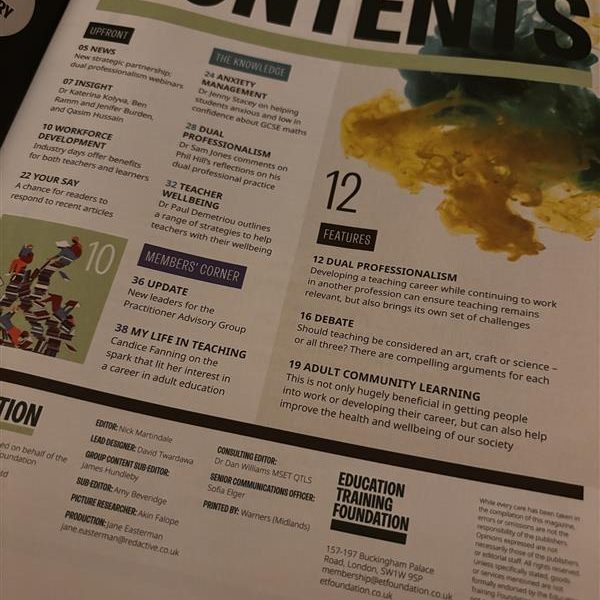
I really enjoyed Elizabeth Holmes’ article on whether teaching should be considered an art, craft or science, and it was a debate I was having with one of my peers a few weeks back. We parked it and agreed to disagree for now.
I think the reason it resurfaces in staff rooms and in the literature as much as it does is because each explanation captures something that’s true, but none of them on by themselves is enough.
The science camp tends to draw on cognitive science. Willingham is a good example, looking at how learning works in the brain. There are things we know about memory, attention, practice, retrieval, and so on, and denying that would be ignorant. But that only tells us what can work once a learner is cognitively available.
The art framing is about judgement, responsiveness, reading the room, adapting in the moment, the bits of teaching that don’t fit neatly into scripts or checklists.
The craft view recognises that a lot of teaching skill is built over time, through experience, trial and error, and practice. Again, all true.
The problem is when any one of those becomes the only lens. As soon as that happens, things get reductive and we start overlooking huge parts of what good teaching actually looks like in real classrooms with real people.
What can get missed in this debate are two more basic questions: what is education for, and what is learning, actually? Until people agree on those, I suspect the art/science/craft argument will just go round in circles forever. To be clear, I don’t think we ever will agree on the answers to those questions.
Learning isn’t purely cognitive, and it doesn’t happen in a vacuum. Vygotsky was making this point decades ago, learning is social, shaped by context and interaction. Maslow (used carefully, and not as a tick list or a catchphrase) reminds us that if people don’t feel safe, secure, or valued, their capacity to engage cognitively is compromised before you even start talking about pedagogy. Writers like Noddings and Freire push this further, arguing that relationship, care, and dialogue aren’t nice extras, they’re foundational.
That’s where I start to feel that the art/science/craft framing misses something important. None of the science, artistry, or craft of teaching can really do anything until certain conditions are in place. Until there’s enough trust. Until learners feel safe enough to engage. Until the foundations are poured.
Seen in this way, teaching makes more sense as a practice, rather than as an art or a science or a craft. Medicine is the comparison I keep coming back to. Medicine is obviously grounded in science. It also involves highly developed technical skills that come with experience. But no one serious would argue that medicine is just “applied science”. Professional judgement matters. Context matters. The relationship between clinician and patient matters. Outcomes depend on far more than simply applying the right technique. You have to get people to agree to go into the operating theatre first….
Teaching feels similar. It draws on science. It involves craft skills built over time. It requires artistry and judgement in complex, human situations. But underpinning all of that is relational work, building the conditions in which learning is even possible. Schön’s idea of professional practice in conditions of uncertainty fits well here, as does Biesta’s argument that education isn’t just about what works, but about what is good, purposeful, and human. You have to get them to agree to go into the classroom first…
So for me, teaching isn’t best described as an art, a science, or a craft. It’s a relational, professional practice that integrates all three, aimed towards humans rather than delivery. Framing it that way helps move us past false binaries, and unnecessarily narrow definitions that minimise the breadth and depth of skills needed to thrive, survive, and have genuine impact in the industry today.


 Calcined Bauxite Fragments
Leave a comment