
This was said to me recently half-jokingly when I was discussing menopause with a colleague. I should probably say up front that this person is safe and well and was not harmed in any way.
I should also say, in relation to everything that I am about to talk about, that today, right now, I am safe and relatively clear.
I have talked openly before about my experiences of Post Natal Depression, Anxiety, Hyper-Focus, Hyper-Activity and the crashes which follow. I think I have also talked about Premenstrual Dysphoric Disorder (PMDD).
Some will say this isn’t the place to discuss such things, and I will say they are wrong. Workplaces, whatever the setting run on people. People are complex beings negotiating any number of challenges in their life and changes in health – be that physical or mental – have a huge impact.
As long as women are employed, their health is absolutely a relevant topic for discussion in this arena. “But Amie, we aren’t talking about men’s health!”. Fair point, but we should be, it is hugely important and something we should be supporting men with.
Let me start with a bold and provocative statement: the lived reality of hormone-driven conditions is invisible until it is impossible to ignore, or indeed until we make it possible to ignore.
PMDD isn’t mild moodiness or “a bit cranky before your period.” It is a neuroendocrine disorder linked to normal hormone fluctuations that trigger severe emotional, cognitive and physical symptoms in a minority of people. Symptoms are predictable but that does not make them easy to manage. The depth of impact on people’s lives is poorly understood.
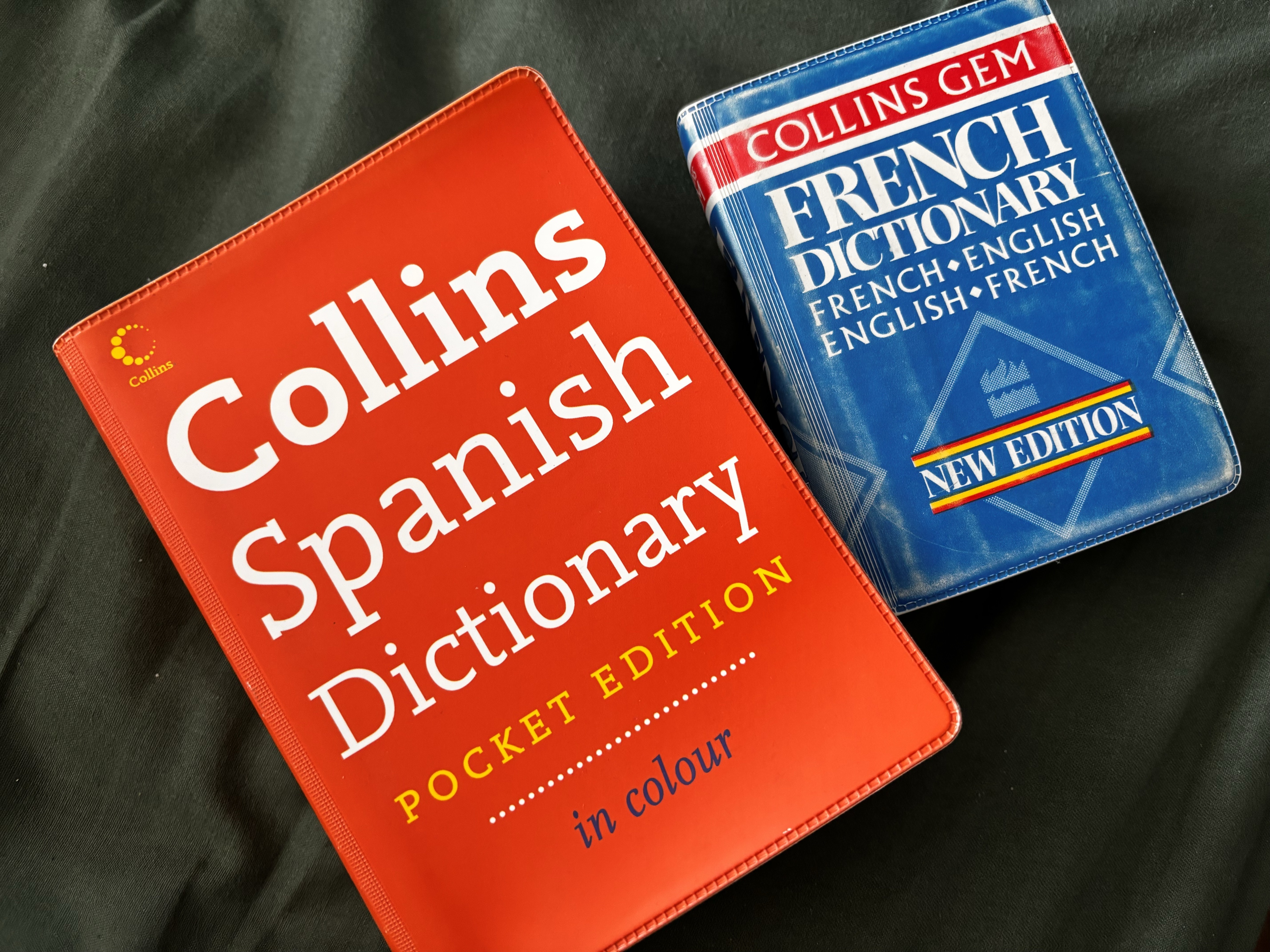
I am all about research, always have been in 2001 (which is somehow 25 years ago…) I was coming to the end of my degree. I was getting very little support with my recent diagnosis of Myalgic Encephalomyelitis and so I researched The Sick Role and illnesses that were seen as deviant due to the lack of binary diagnostic tests (it’s a real page turner, you are welcome to borrow it, should you run out of … literally any other thing to read). Now I am researching for my MPhil/PhD. Reading and writing grounds me. I am surrounded by books (ask anyone who has ever helped me move) they are my comfort blanket.
The facts and figures in relation to the perfect storm that is my brain, will tell you this: Lifetime prevalence studies show that 37–45 percent of people with PMDD report suicidal ideation; suicide attempts among people with PMDD are significantly higher than in those without it; Some analyses suggest people with PMDD are several times more likely to attempt suicide than those without menstrual mood symptoms. Research into the lived experience of PMDD reports similar figures: in large samples many people with PMDD have self-harm histories, and a meaningful proportion have attempted suicide multiple times.
This is not occasional sadness, it is a recurrent, intense biological vulnerability. And yet, these risks are rarely discussed outside specialist circles. They are certainly not part of everyday conversation in workplaces or social spaces.
I know this because for years – decade after decade – I carried the symptoms: mood extremes; racing thoughts; intense hopelessness; the profound sense of worthlessness that comes at predictable points in a cycle; and the exhaustion of trying to explain it all without sounding dramatic or like a crazy lady.
The cognitive distortion is so intense that I believe I am a burden. I have weeks where every thought felt sharp and urgent, and days where I couldn’t carry my own weight. Other conditions complicate this picture. The M.E keeps my nervous system on high alert and my body exhausted. I have neurodivergent traits, which shape how I feel and regulate emotion, how I sense internal states, how I respond to stress and uncertainty.
Conditions like PMDD are still under-diagnosed, under-researched, and too often dismissed as “hormonal moodiness.” People with PMDD are often misdiagnosed with depression or other psychiatric disorders and given treatments that don’t address the underlying biology. On average, diagnosis takes more than a decade. In the UK it is estimated that over a million people live with PMDD, of whom a large majority will experience suicidal thoughts, many will self-harm, and a third will attempt suicide.
The answer, according to my consultant who I have waited the best part of 4 years to see, is chemical menopause. (I asked for a hysterectomy and after heated discussion we have agreed on this line of treatment for now – I may or may not have been politely asked to leave because “I have other patients to see”.)
I have begun treatment that suppresses ovarian hormone production. This is what clinicians call chemical menopause. Temporarily, this interrupts the cycle that triggers the worst mood symptoms. But it also isn’t a switch that flips from ill to well – if only! The first weeks are volatile. Hormone levels don’t drop instantly but shift in a way that can make emotions swing wildly. The body reacts, the nervous system recalibrates, and you are in a phase where nothing feels stable.
I knew it would get worse before it got better. My mantra has been “It will get worse before it gets better. It’s worse, so soon, it will be better”. I didn’t think it was possible but my emotional landscape became even more unpredictable. Flat one moment, buzzing the next, low and worthless then inexplicably ready to take on the world. It feels terrifying. It feels like losing control. Some days I fear I am sliding into a permanent darkness. So, I read. I learned something about the biology of it: this is the brain’s response to sudden hormonal change, and it is a transition phase, not a terminal diagnosis.
Which is easy to read and easy to write but difficult to hold on to during the worst of it.
I have clung (not metaphorically, but literally) to my husband, shaking and repeating “I am scared, I am scared”. I have triggered support circles; people are texting me throughout the day “checking in” I am responding with anything from a super long explanation to a thumbs up – but they know what is important is that I am responding and they know what to do if I don’t.
I don’t write this to be dramatic. I write it so that people don’t feel alone. So that they might feel slightly less like a lunatic. In one response to a checking in message I wrote “I feel like if I could take my skin off, scratch my brain and rinse my bones I’d feel better – I am aware this makes me sound like a lunatic. I feel like a lunatic about 75% of the time at the moment”.
The risks are real. The suffering is real. The studies show I am not alone – real people’s lives sit behind the statistics. Mine is one of them.
So yes, I can take a joke … but when someone reduces menopause or PMDD to something like “man flu” they miss the fact that for some people this is life-threatening. They miss the fact that the brain and body are deeply integrated systems that respond to hormones in ways that profoundly affect mood, cognition, and behaviour. They miss the fact that neurodiversity and chronic physical conditions like M.E can amplify every emotional shift. You will hear me say a lot, “my brain is loud today”. I have headphones on constantly, usually this is to block our distractions in the office and allow me to focus, right now it is to block out the intrusive thoughts that are tormenting me.
I imagine for my colleagues to see me so active on LinkedIn it probably seems incongruous with the fact that I am not well enough to be at work. But, as hard as it has been for me to accept, right now, I am not well enough to be at work. At home, by myself I can sit in my oversized clothes that don’t irritate my skin too much, I can sob into my cup of tea while reading, I can stim, I can twitch and jerk without fear of judgement, I can sleep, I can strip off when I am too hot and whack the heating up when I am too cold, I can play loud music, I can write, I can behave like a crazy lady. I only have to mask for a few hours a day, between my son coming home from nursery and going to bed. I don’t manage that well every day, but it is exhausting.
I am safe today.
That is no small thing.
The treatment I am on should start to suppress the cyclical triggers that cause the worst of my symptoms. I am tracking patterns, because I have lived through the cycles before, and because the odds are very high that this intervention will change things for the better. But I can’t do it blindly, I have to know where I am at. I have to let others know.
The conversations we have about menstruation, menopause, hormonal treatments, and mental health need to be meaningful. We need to acknowledge the severity, the biological reality, the suicide risk, and the lived experience. We need doctors who take these conditions seriously, workplaces that understand the functional impact, and a culture that stops equating hormonal conditions with trivial discomfort.
If someone tells you PMDD or menopause is “like man flu,” what they are really saying is they haven’t listened. They haven’t done the research. They haven’t lived it.
So here I am again, out here, being vulnerable, telling uncomfortable truths. Shining a light into the darkness. If you are in this, I am here with you.
It is, as a wise woman once said to me “unutterably shit” – but you do not have to be alone. You do not have to mask. You do not have to grin and bear it to breaking point.




Leave a Reply